Google Analytics 4 also know as GA4 is in news for the past year. Here are some Google Analytics 4 blog posts that will help you demystify this new tool from Google.
When you create a new Google Analytics property it is automatically created in GA4, this post shows you how you can create it in the old version. Read more...
Well GA4 is all new, this post answers if you should upgrade or not. Read more...
Learn More about GA4
Optizent Academy memberships’ sole focus is to develop data-driven marketers and digital analysts. No matter which stage of your knowledge and career you are at, we have courses and training options for you. Visit https://academy.optizent.com/courses/membership to learn more about Optizent Academy.
Optizent Academy Membership provides
Access to courses, eBook, and presentations based on 20 years of Digital Analytics Consulting and Training Experience and 20+
Regular training sessions and challenges to test, enhance and add to your skillset
Exclusive access to a community to support you when you need it, so you never feel alone
Professional Relationships & Network Development
Practical advice - apply what you learn right away
GA4 Consulting Services
Contact Us to learn about our consulting services and how we can help your organization.
Imagine this: You go to a swanky cocktail party with the top names in your industry. There’s live jazz music and waiters going around with fancy hors d’oeuvres.
Dressed to the nines, you sidle up to a professional acquaintance and show them a dog picture on your phone. You proclaim, “Look at that heckin’ chonkerino!”
The pianist stops playing. Someone drops their mini cup of caviar. Everyone stares.
Casual language and memes are fun to use, but you’ve gotta know when and where to use them. They can work for landing pages, but only for the right type of audience and with the right execution. When you do stick the landing, you’ll deliver one-of-a-kind landing page copy.
We’re here to help you learn how to line up your audience and brand voicesanduse popular elements of casual language in your landing page. Read on to set yourself up to create fun landing pages that resonate with your visitors.
Matching Your Audience and Brand Voices
Before you try adding casual language to your landing pages, it’s essential to evaluate how much of it you should use with your brand and audience. You need to think about your audience and brand’s voices, then figure out how you want to match ‘em.
How does your audience speak?
Language is a powerful tool for relating to your audience. You can gain a lot of trust by mimicking the language they use in their speech and writing.
So before you try any new language styles or tones of voice on your landing page, you’ve gotta have thorough audience research on hand. Your customers’ demographics, interests, and survey responses say a lot about the language that’ll work for them. For example, you have a higher chance of succeeding with meme-speak if you have a younger audience.
How does your brand speak?
While your audience might speak one way, it might be ideal for your brand to speak another way. It all depends on how you want to position yourself compared to your customer. Do you want your audience to see you as a friend or coach?
In some cases, you need to choose more authoritative language to build trust with your customers, even if they wouldn’t use those words themselves. For example, the Unbounce Conversion Benchmark Report found that agency customers prefer complicated language because it shows authority.
On the other hand, the same report also saw legal landing pages perform better when using more straightforward and down-to-earth language. It all comes down to making decisions based on a strong foundation of audience and industry research—whether it’s ours or your own.
For more guidance, you can also check out your brand voice guide if you have one. If you don’t, you should at least sit down and ask yourself questions like:
What personality do I want my brand to express?
How do I want my audience to feel after they read my brand’s copy?
What sets my brand apart from others?
Elements That Affect Your Landing Page’s Tone
Now that you understand how casual you want to be on your landing page, think about the ways these elements affect how it’s perceived:
Jargon (or lack thereof)
Jargon is language that only makes sense within a niche or industry. Best practices suggest cutting jargon in landing page copy. This rule especially applies when you’re shooting for a casual tone.
You see, jargon puts you at the risk of alienating visitors. Unless you’re in a business-to-business (B2B) industry, you’ll want to minimize or define jargon wherever you can to keep your landing page casual.
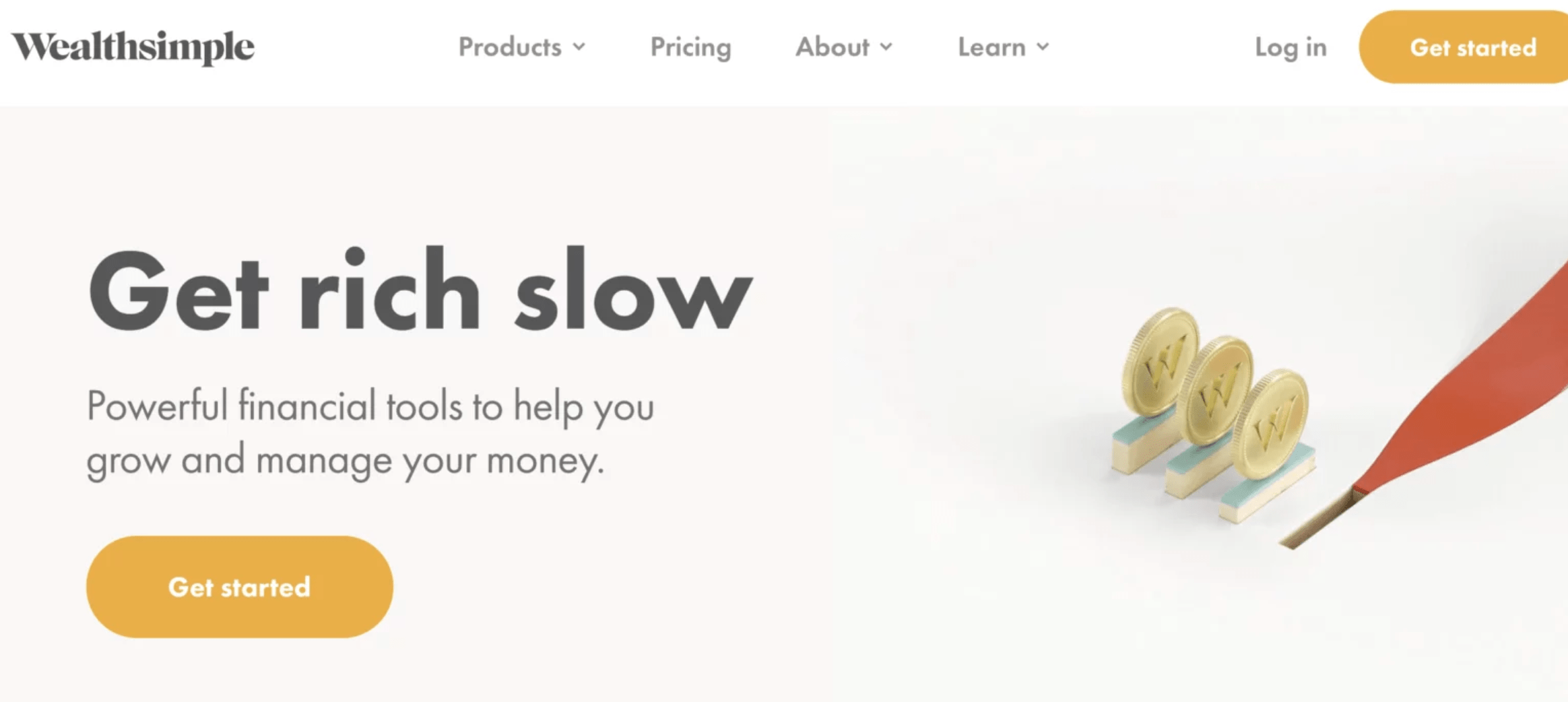
Look how Wealthsimple makes investing sound simple by avoiding jargon:
Image courtesy of Wealthsimple
Investments are complicated stuff, but Wealthsimple explains the process in one line: “Get rich slow.” That phrase makes it feel like the brand is speaking on your level, implying that they’ll work with you side-by-side.
Slang and informal language
Slang is informal language used outside of standard definitions and speech. When you use it alongside informal language, you can create conversational, relatable copy. But, informal language and slang can also backfire if you don’t use them well.
If you want to try informal language on your landing page, don’t type a single character unless you know its meaning inside and out. One common example of misused slang is “Netflix and chill.” While the original phrase has sexual connotations, many brands combine their product names with “and chill,” leading to unfortunate results.
You should also stay away from informal language if you’re covering a serious topic. It should go without saying, but you’d be surprised to see how often it happens.
Here’s an example of informal language done well from a Mooala landing page headline:
Image courtesy of Mooala
The headline, “BANANAMILK. It’s a Thing.” uses informal language to acknowledge that, hey, banana milk’s a weird concept, but Mooala’s happy to sit down with you and explain. They poke a little fun at themselves, lowering their audience’s defenses.
Swearing
Swearing can be a powerful marketing tool, but you’ve gotta make sure you’re working with the right industry and audience.
While cuss words used to be utterly taboo in marketing, you’ll see them in the wild a lot more frequently nowadays. Heck, some brands use them in their names, like Big Ass Fans.
When you use swear words with the right people, you could increase your chance of conversions. A study by Gong found that sales professionals swear on 20% of their buyer calls and that those calls had a higher chance of closing sales.
So, should you use cuss words in your landing page copy? Check out whether other companies in your niche are swearing, look at the language your audience uses, and go from there. If you decide to try it out, start small and adjust according to your audience’s reaction.
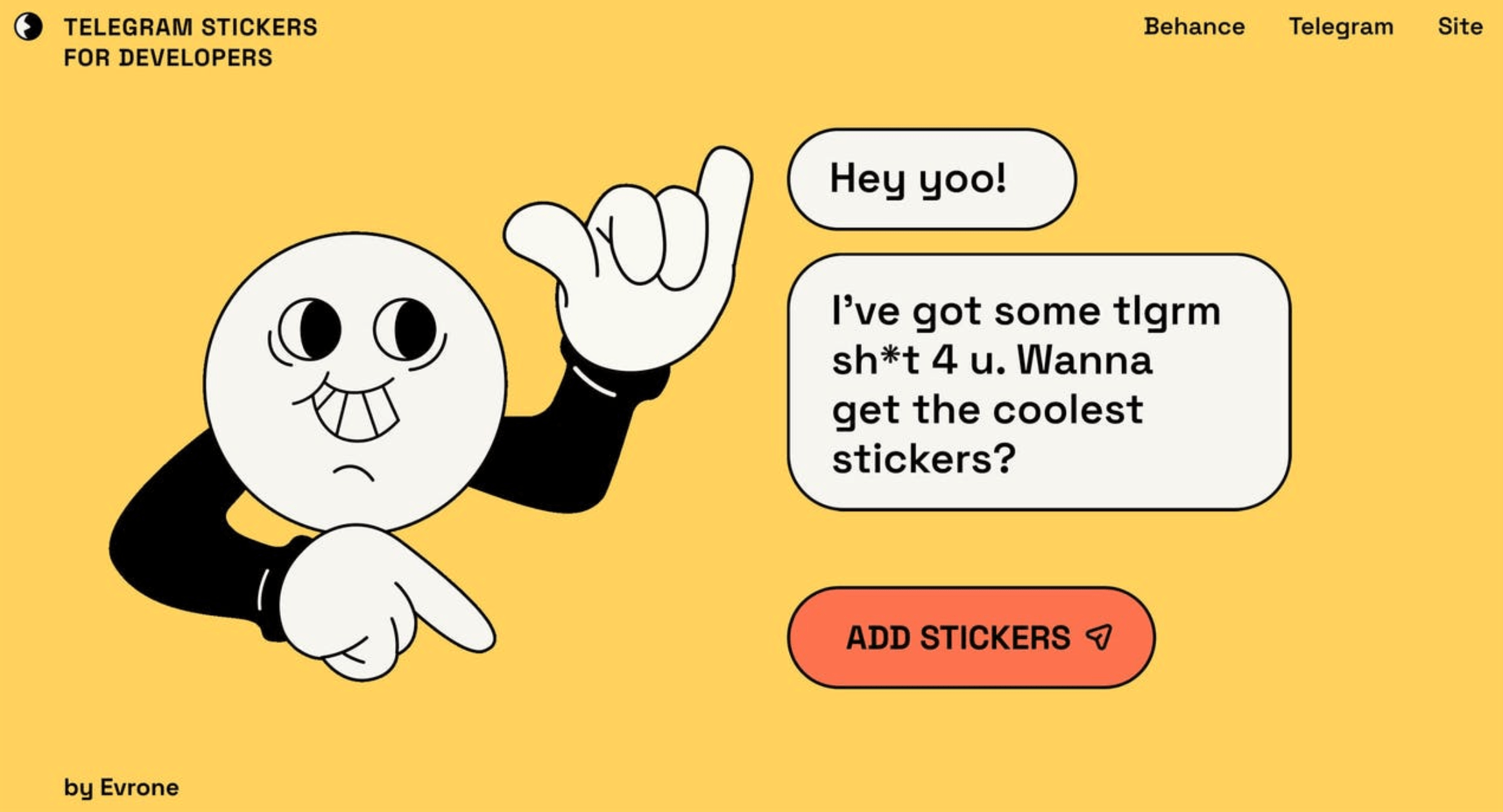
This landing page for a Telegram sticker pack uses a (censored) swear word off the bat. Its audience—developers—and industry—tech—are both pretty casual and open to swearing, so it works.
Image courtesy of Evrone
Emoji
You might think emojis are too casual for a business landing page, but it turns out these little characters have a place in the professional world. About three-fifths of emoji users say they use them at work. So, you have room to use them, too—but, as always, you need to consider how they’ll come across.
If you decide to use emojis on your landing page, you’ll want to make sure all of your visitors feel included. Try to use emojis one at a time and sparingly, so they don’t crowd a screen reader’s content. Show a diverse range of skin tones and experiences in your emojis if you plan on using any that look like people.
Keep in mind that emojis have different meanings across cultures, too. For example, Western folks connect the flying money emoji () to wealth, but in Japan, that emoji means you’re *losing* money.
This Flowmagic landing pageends each of its feature headers with an emoji. This careful use of emoji adds a casual tone to the page without feeling overwhelming:
Image courtesy of Flowmagic
GIFs and memes
Are you looking for more visuals to break up your copy? You could try adding a GIF or a meme to make your landing page more fun and relatable. Consider these factors when deciding to get your meme on:
Load time: If you’re using a GIF, is it optimized for fast loading? Speed has a huge impact on conversions, so you don’t want it bogging down your load times.
Meaning: Memes and GIFs often have hidden origins or meanings. Research each one you use to make sure you aren’t sending the wrong message.
Audience: Will your audience appreciate your meme or GIF? People from different generations and interest groups use different memes.
Does Your Brand Wear Jeans or Slacks?
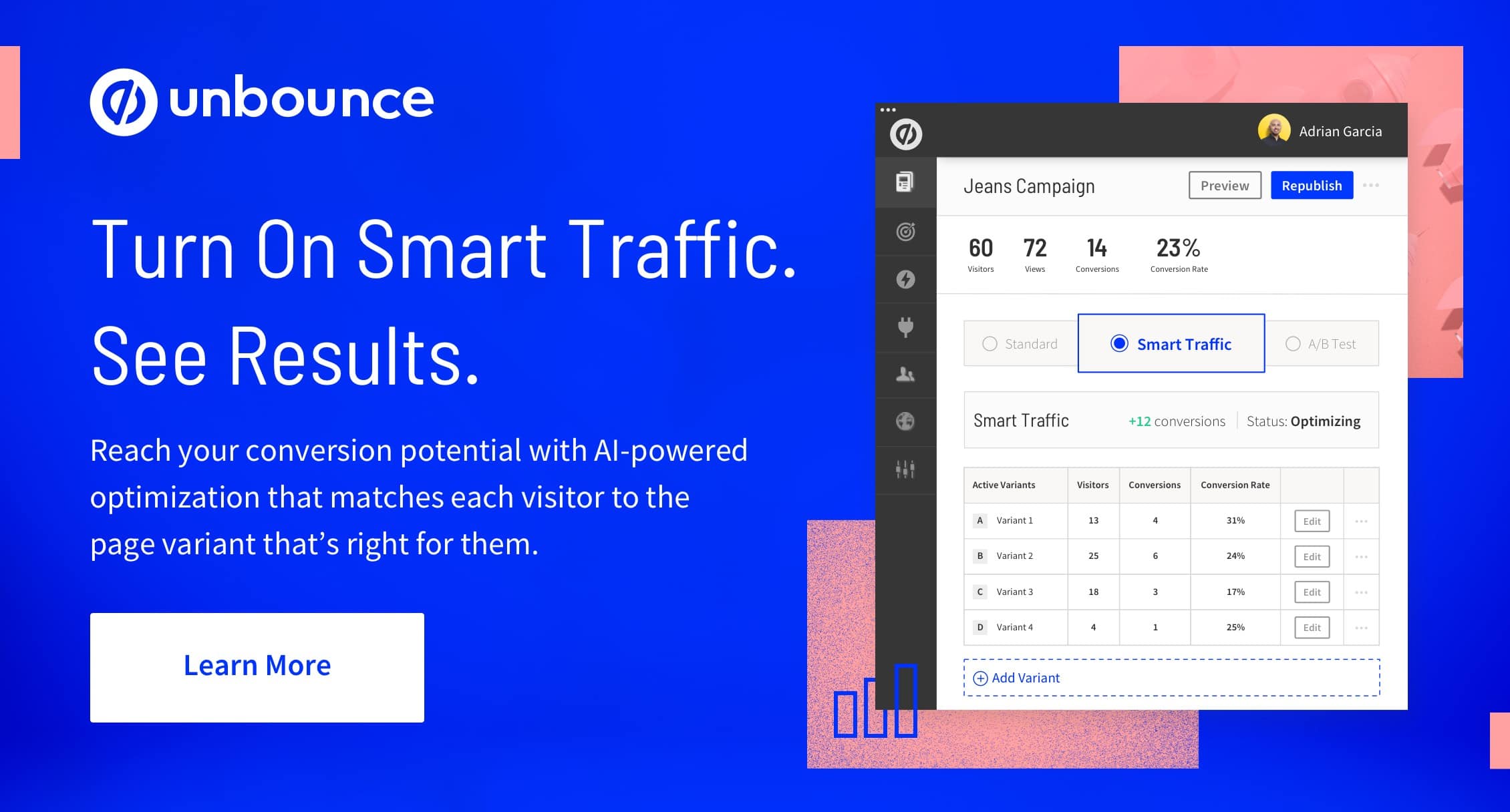
What kind of casual language should your brand use on landing pages? The answer depends on your industry, audience, and marketing goals—there’s no definitive answer. Only strong research and a little experimentation will show you the way. Since most brands have more than one audience segment, it can also help to create landing page variants with different tones of voice. Try using a tool like Smart Traffic to direct visitors to variants that match their preferences.
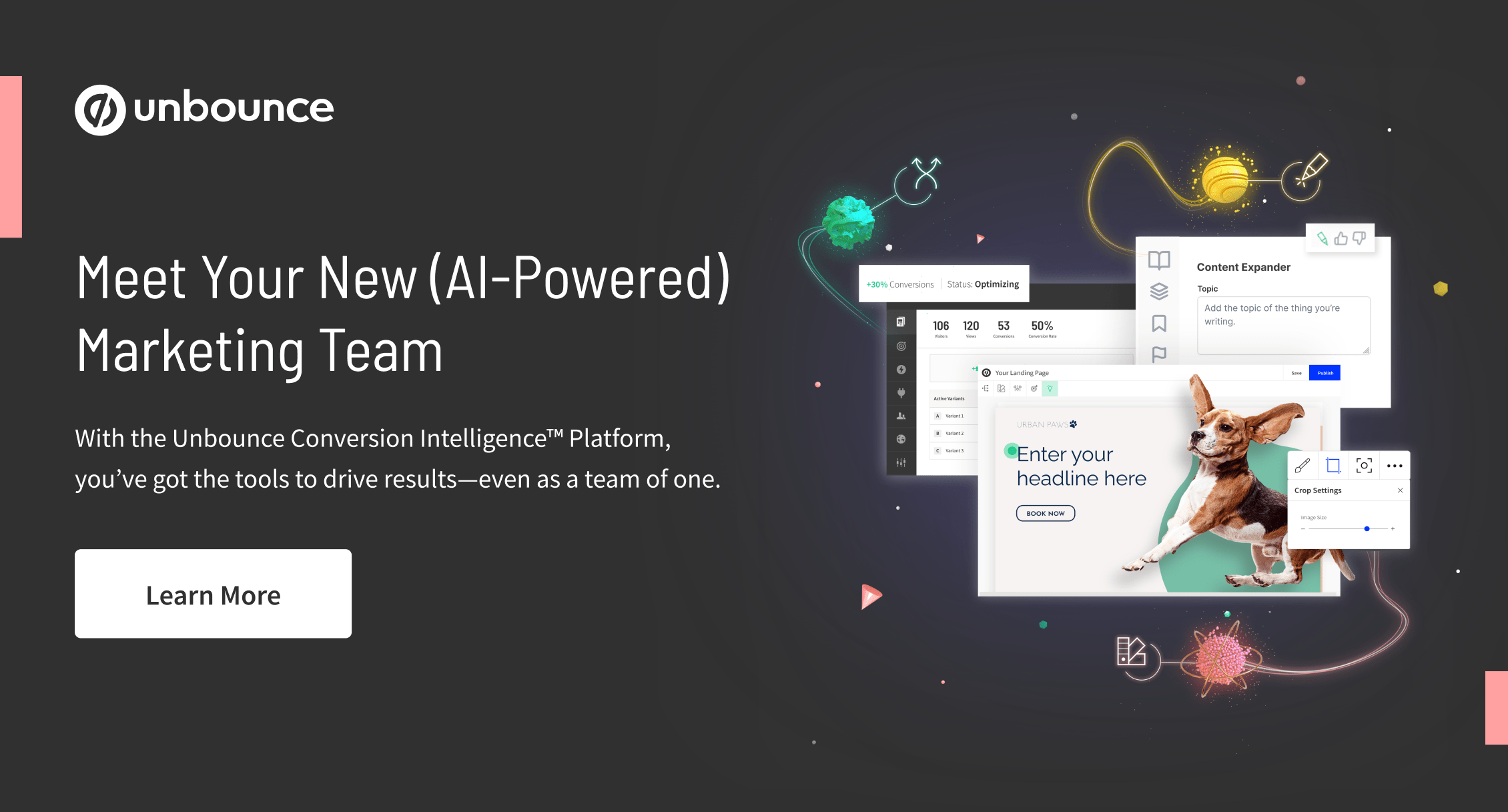
As online competition intensifies and consumer expectations continue to evolve, Unbounce’s latest innovation is a crucial part of the company’s aggressive ambitions: To help small and midsize businesses (SMBs) optimize their marketing with AI marketing insights traditionally designed for large corporations.
The platform pairs a marketer’s intelligence with machine learning to increase the conversion rates of marketing campaigns at every touchpoint. Composed of a suite of smart solutions, including Smart Builder, Smart Traffic, and the newly launched AI copywriting assistant, Smart Copy, the new platform provides the fastest way to increase visitor conversions using conversion intelligence—a disruptive new approach to marketing.
“Since opening our doors more than 10 years ago as an innovator in landing page software, Unbounce has existed to help small businesses grow smarter by making access to essential digital marketing tools easy,” said Tamara Grominsky, chief strategy officer of Unbounce. “However, today, we’re seeing small businesses falling behind while large enterprises with big budgets are dominating the competitive landscape.
“Conversion Intelligence allows marketers, with limited budgets and teams, to pair their own expertise with data-powered AI insights to create and optimize the highest-converting campaigns possible. It’s simple: Marketers who aren’t embracing this new approach are going to be left behind.”
Conversion Intelligence: The New Era of Marketing
By leveraging Unbounce’s Conversion Intelligence Platform, small business marketers canpair their creative know-how with machine learning to effortlessly create relevance, improve conversion rates, and understand where to best spend their time for optimal impact. A game-changer for solopreneurs and marketers alike, the platform provides the fastest way to increase visitor conversions through the following conversion intelligence solutions:
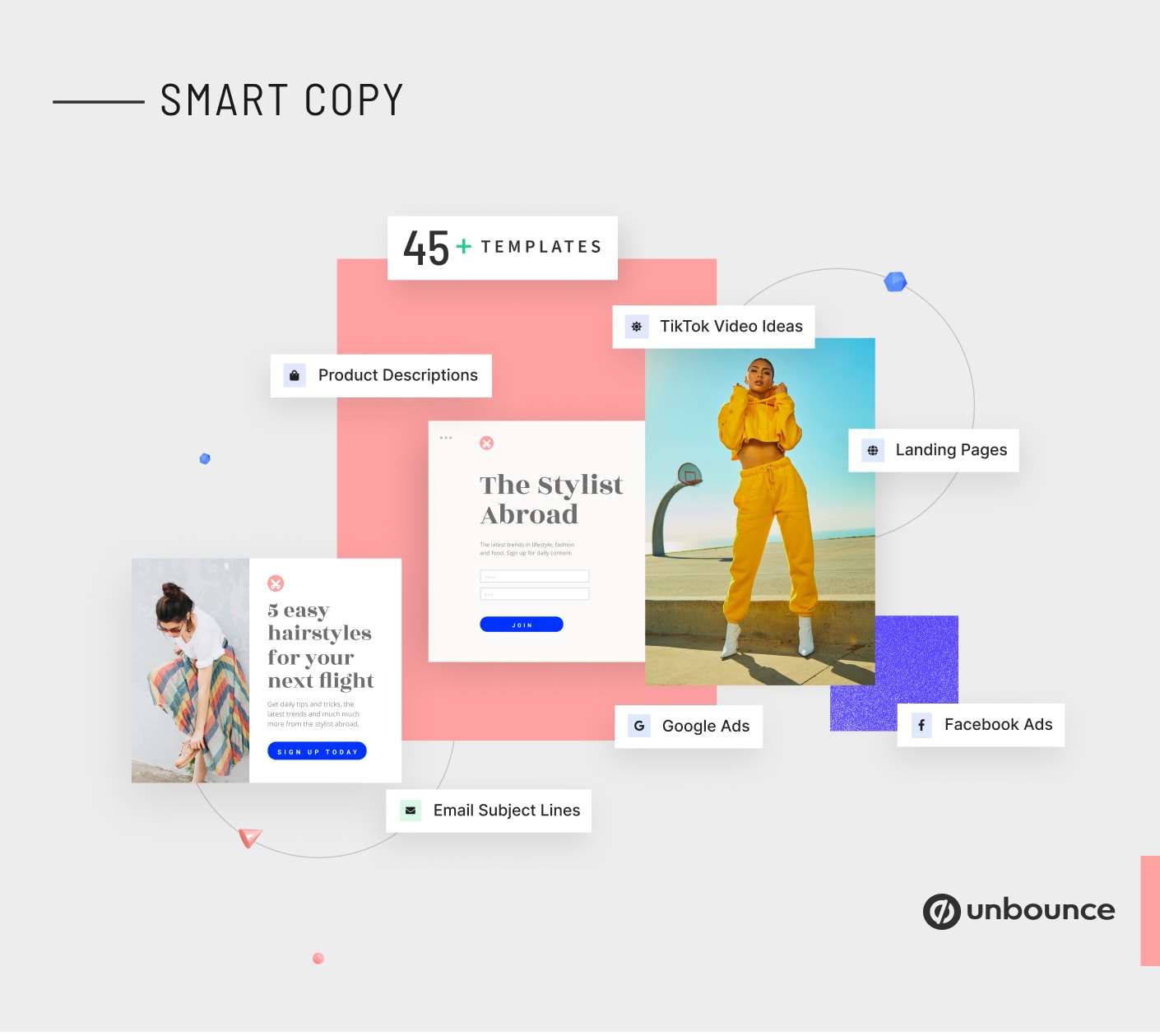
Smart Copy: A new AI copywriting solution released today, Smart Copy uses GPT-3 to generate human-like copy within seconds and in six different languages for ads, emails, landing pages, blog posts, TikTok videos, pitches, and 40 more copy creation needs.
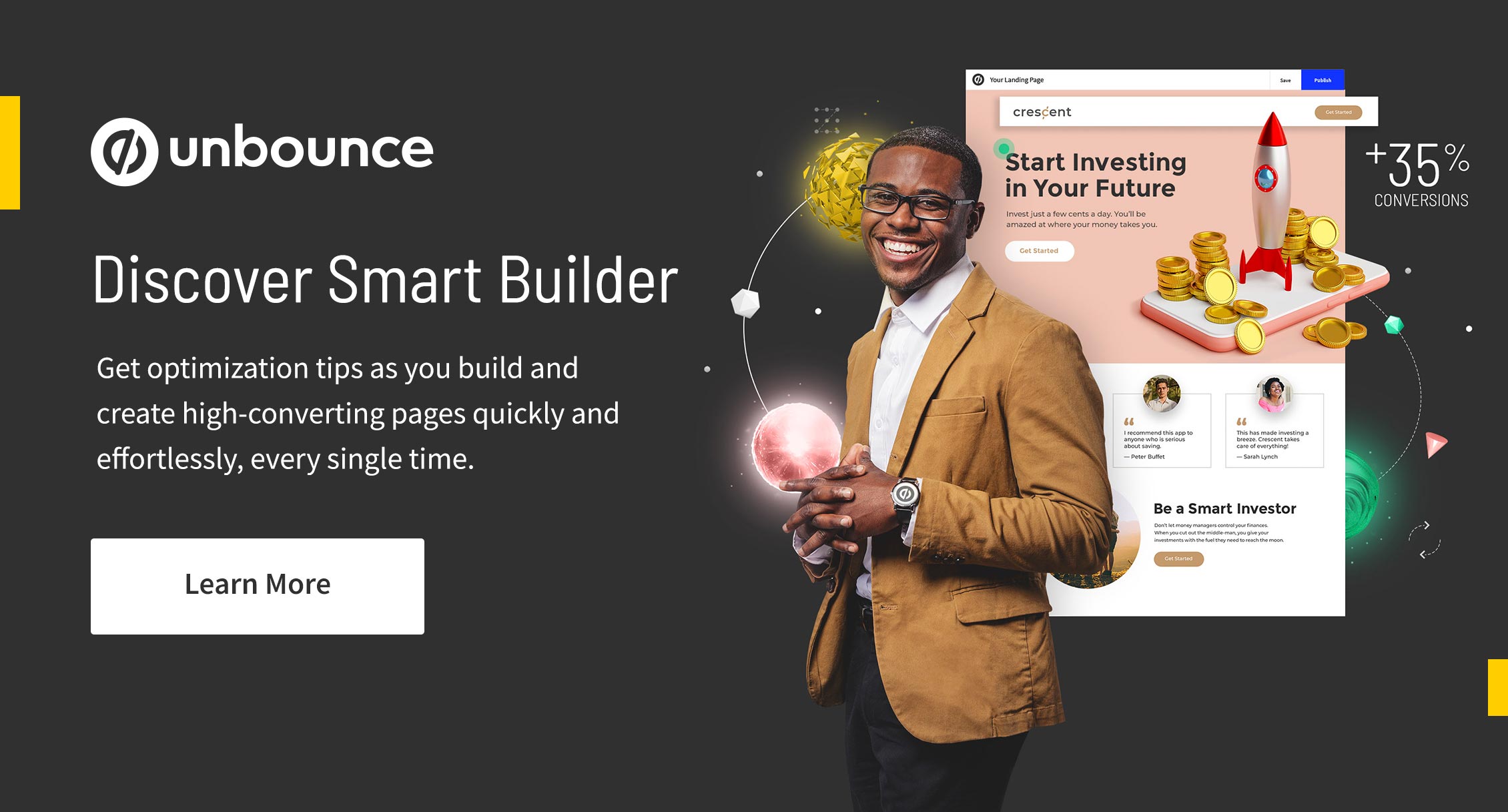
Smart Builder: An AI-powered landing page builder that allows marketers to create on-brand pages designed to convert and based on a marketer’s specific industry and campaign goals.
Smart Traffic: A self-driving optimization tool for SMBs that connects your visitors with their best-fit landing pages to increase conversions by an average of 30%, while identifying conversion patterns in as few as 50 visits for landing pages. In comparison to traditional A/B testing, Smart Traffic saves marketers precious ad spend, time and effort, and eliminates the need for one champion page.
“The Unbounce Smart Copy solution inspires me. It’s like brainstorming with a room full of people, but it’s just me and my AI copywriting ‘assistant,'” said Sebastiaan Hooft, founder of Redesign Records. “Without Smart Copy, I would be spending an extra four hours a day crafting copy—precious time that I’d rather spend on building my brand and business. Now, I can say so-long to writers’ block and be confident in the quality and performance of my content.”
A Solution for Time-Strapped, Budget-Constrained SMBs
Today’s small business owners face limited time, ad budgets, and marketing expertise to reach audiences in the hyper-accelerated digital landscape; research demonstrates that 47% of small business owners run marketing entirely on their own and inevitably end up wearing too many hats.
With Unbounce as a core part of their marketing team, small businesses have been able to increase success without a new budget, improve conversion rates across all segments, and increase the confidence needed to grow their business while reducing the need for a designer, copywriter, or Conversion Rate Optimization (CRO) expert.
“For many SMB marketers, taking on marketing efforts while trying to grow the business on limited budgets is a daunting and seemingly impossible task,” said Jonathan Naccache, founder of Webistry. “The changing digital landscape means that one-size-fits-all and traditional marketing no longer yield results and small businesses like myself need to create meaningful marketing experiences that drive conversions to survive.
“With Unbounce, we‘ve been able to grow our customers, better understand and reach their target audience, and keep pace with the changing digital landscape.”
It’s the middle of the night and all of a sudden: drip, drip, drip…
You wipe your face and peer through the darkness at the ceiling. Uh-oh, something’s leaking up there. Like most people, you reach for your smartphone and search for a plumber that would be available to help at this ungodly hour.
Scroll, tap, and voilà: There’s a landing page for 24/7 plumbing in your area with a CTA to dial the number right away.
In the olden days, you’d likely look up the number in the phone book (a phone what?). Now, people turn to their mobile devices as soon as they have a problem that needs solving or a question that needs answering.
We all know there’s nothing more reassuring than hearing a human voice at the other end of the line. And that’s why optimizing your landing pages for pay-per-call advertising campaigns is crucial in this digital landscape.
Why Pay-Per-Call Ad Campaigns Are Critical in the Mobile Age
Pay-per-call ad campaigns are the holy grail of mobile online marketing. They’re what every marketer dreams about and strives for.
With a phone call, leads don’t need to hide behind technology: no intrusive qualifying questions to reply to, no multiple-choice buttons, no pull-down menus, no CAPTCHA riddles.
Phone leads are more engaged and less guarded.
Why Are Landing Pages Important for Pay-Per-Call Campaigns
A landing page is the first thing your potential customer will see after they click on your pay-per-call ad. To be effective, your page needs to become an extension of your ad by:
Showing clear benefits that answer your prospect’s search query: If the search term is “weekend plumbers near me” your benefits must reflect your ability to be on site in 30 minutes or less, your lack of a weekend surcharge, the fact that you run a 24/7 operation including holidays, and so on.
Reflecting the needs of your prospect through putting yourself in their shoes: “We know how frustrating it is when your plumbing fails in the most inopportune time, the inconvenience of a pipe leak, or a clogged kitchen sink when all hardware stores are closed.”
Presenting a clear call to action: This is where you reach out offering your help, where you say, “Our reps are always on standby, just a phone call away to get all your problems solved.”
What Should You Include in Your Pay-Per-Call Landing Page Design?
When it comes to pay-per-call landing page design, you need to use a less is more approach. Your job is to persuade your prospect to call you without making them fall into a rabbit hole of unnecessary information.
Don’t sell your business by showing endless feature lists and a company backgrounder. Instead, build a bridge of trust by reflecting their needs and presenting your solution in a way that makes them feel you’re the white knight that’ll come to their rescue.
To this effect, your pay-per-call landing page design needs to include:
A headline and sub-headline that reflects your prospect’s main pain point and your solution. Make this text, font, and color clearly contrast with your page’s background palette.
A call to action button that jumps out of the page so there’s never any doubt in the mind of your prospect that a single tap will immediately put them in touch with you.
An offer that creates peace of mind. In other words, an offer that’ll relieve their pain, not showcase your bells and whistles (so, stay away from expressions that have nothing to do with your prospect, like “30 years in business,” “No job is too small,” etc.).
Last but not least, your business logo.
Examples of Pay-Per-Call Landing Pages
The proof is in the pudding, as they say, so let’s look at a few pay-per-call landing page examples and discuss their key elements.
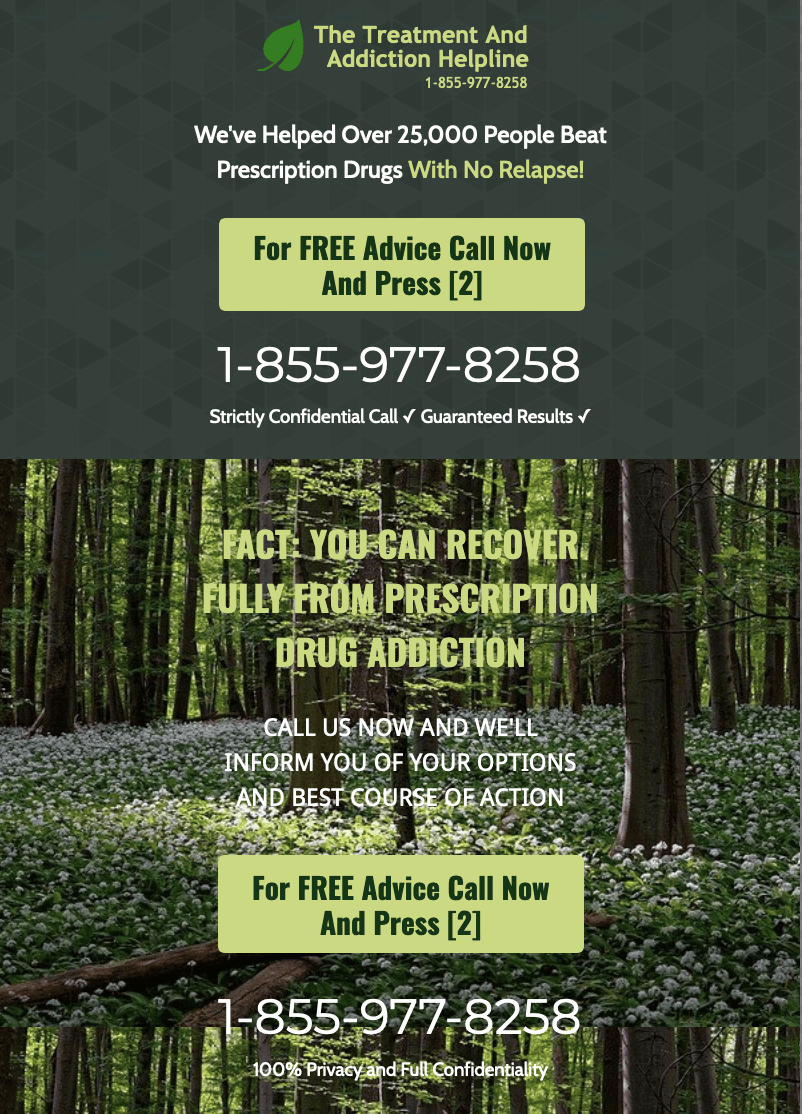
1. Health and wellness
As you can see, the choice of a forest hero shot evokes a sense of grounding and peace, which is what someone in need of the services of a drug rehab center is looking for.
The messaging encourages without being forceful, emphasizing confidentiality coupled with free advice.
Most importantly, the call to action is clear and tells you exactly what to do when you call (“Press 2”), yet it uses a subdued tone that complements the color palette of the background.
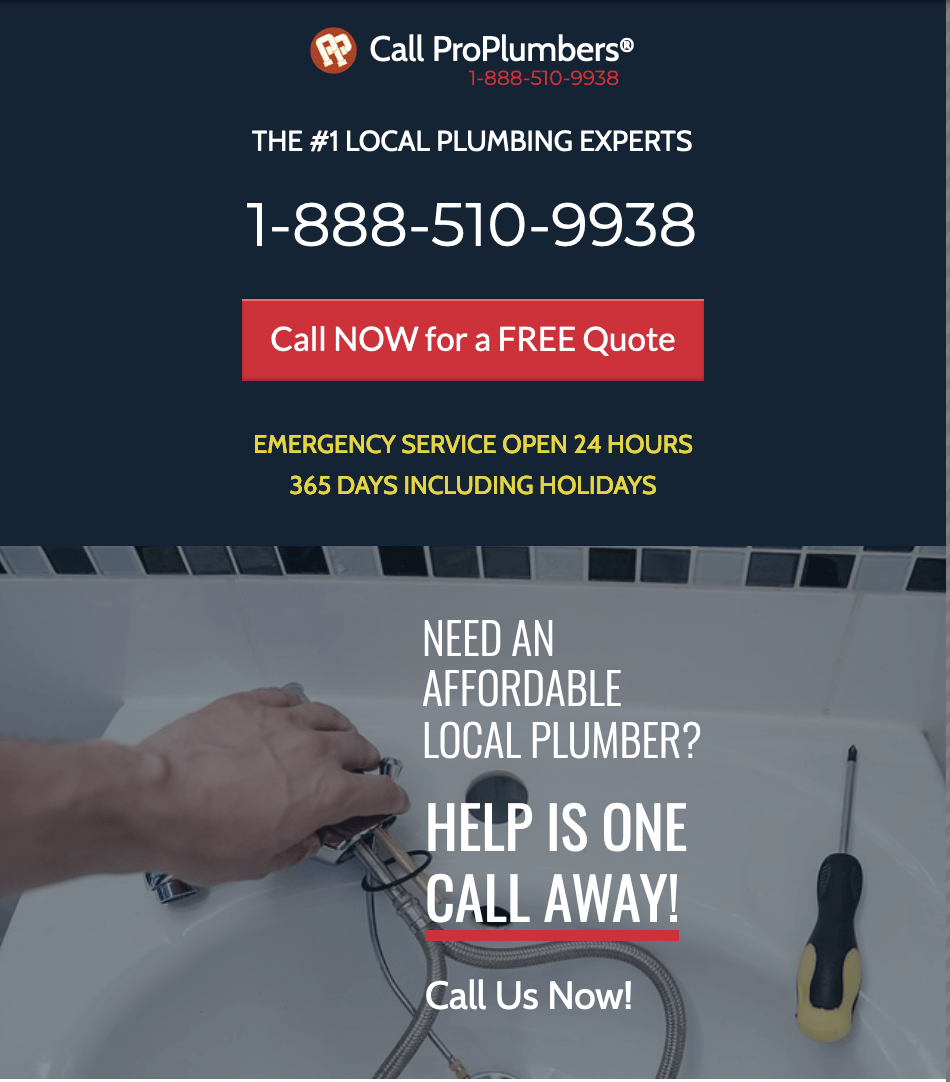
2. Home services
Here’s a landing page in response to a search for an “affordable weekend plumber.” Cost is key in the messaging to counter the expectation that a weekend plumbing call is going to be a lot more expensive than a regular business hours call.
This landing page’s job is to convey the message that even though they operate 24/7/365, they’re still affordable. To make this even clearer, the call to action button stresses that there will be no charge to get an estimate for the work.
Finally, the hero shot shows an expert’s hand and tools to instill trust and peace of mind—meaning that no matter how dire the plumbing emergency might be, the prospect shouldn’t worry (because things will get better soon).
3. Legal
This is a landing page for a legal firm specializing in food poisoning personal injury claims. The focus here is to get top compensation for their clients, a key expectation for these types of calls.
They clearly point out the fact that clients are not expected to have any out-of-pocket expenses whatsoever and that all services will be offered on a contingency basis.
They also stress their 24/7 availability, because food poisoning cases often occur after hours and they want to make sure their prospects know they’ll be available when the incident happens, so they can advise them what to do while the iron is hot.
The call to action is clean and the message makes it clear how to navigate the firm’s phone answering choices since personal injury law firms handle many different types of cases.
Finally, the hero shot reflects the predicament of the victim, signaling empathy towards their situation.
Want to Optimize Your Pay-Per-Call Landing Pages? We’re Here to Help
When it comes to optimizing your landing pages to maximize pay-per-call conversions, you always need to make sure that the job of your page is not to “sell” your services, but to become the natural solution to your prospect’s pain points.
All your design choices, from the color palette to call-to-action buttons to hero images, must be chosen to reflect the needs and hopes of your prospect.
The same goes for your messaging: Empathy drives conversions. The more your prospect identifies with your messaging and feels that you truly understand them, the more they’ll feel comfortable taking action and making that call.
Try Smart Builder to create and optimize variants of your landing pages, and watch your pay-per-call conversions get the boost they deserve.
As you may have heard, Pay-Per-Click (PPC) is a competitive game.
PPC is a method of digital advertising in which you aim to get your ads to rank as the highest result displayed for user searches, and you, as the advertiser, pay a fee each time it’s clicked. This means that when a user types in words related to your business, your customized ad will be the first result they see—sometimes.
Thousands of businesses are willing to spend unbelievable amounts of money to rank at the top of search engine results pages (SERP) and in the most relevant places for their users around the web.
In 2019, small businesses spent between $9,000 and $10,000 per month on PPC, with Google making an average of $116.5 billion in revenue from Google Ads alone the year before.
So, yeah—businesses bid high numbers to play. But that doesn’t mean you can’t play too.
The key to maximizing your return on ad spend (ROAS) is to be highly strategic in your audience targeting, keyword usage, and landing page design.
We’re here to show you how to get the best bang for your buck by cleaning up your Pay-Per-Click (PPC) strategy.
(Pssssst … Do you have a specific PPC-related question? Hop straight to it here :)
Think of your paid ad as an internet detective. Each platform varies in how you can create your ad sets, but one thing remains the same:
Your ad (internet detective) finds the most relevant spots to be seen by your ideal customers and fights for optimal placements.
There are two ad formats to choose from once you and your team set your campaign goals: display and search.
Display
Display ads rely on graphic formats to catch user attention, build brand awareness, and guide users to your site. They’re shown based on specific audience targeting criteria such as demographics, interests, or retargeting events and show up in images and video.
You typically see them displayed on the newsfeed of your social media platforms. Although, your display ad isn’t just confined to social media. It can also appear on websites that have similar content and keywords to your business. That way, even when your prospects are considering alternatives—you can still be top of mind.
Search ads are a wordsmith’s dream. These ad formats rely on short, impactful copy that sends the right message and captures user intent. This is where knowing your audience well will pay off—literally. These ads appear at the top of the SERP.
Aside from the above or below search results on Google search, through the Google Search Network, your ads can appear beside, above, or below search results on Google Play, the Shopping tab, Google Images, Google Maps, and the Maps app.
If your budget doesn’t allow for a high bid (or you don’t feel it’s the best use of your budget), then you’ll need to be extra clear on the keywords you use.
Coupling keywords with your offer determines what your winning combination will be. You need to secure space in your market with a relevant keyword while also finding a way to stand out. It might take a couple of tweaks to get the formula right, so make sure you keep track of your ad performance. This way, you can jump into your campaign to move things around while making the necessary changes to your post-click landing page.
Tip: Take a look at your competitors’ performance by typing in a keyword you might share. Take note of where their ads and other pages land on the first search results page and use that insight to determine how you can differentiate your copy/offering.
Give it time, and you’re sure to strike gold as you refine your ad set.
Retargeting
You can use retargeting ads in both display and search formats on the same platforms you launch your PPC campaigns from (i.e, Google, Facebook, Youtube, Bing, LinkedIn). Retargeting leverages past engagements with your brand to show consumers ads to re-engage them.
For example, when you’re shopping online and leave a website before purchasing the items in your cart, the brand receives an “abandoned cart” notice. If they have retargeting ads in place, you’ll notice reminders to revisit their website through:
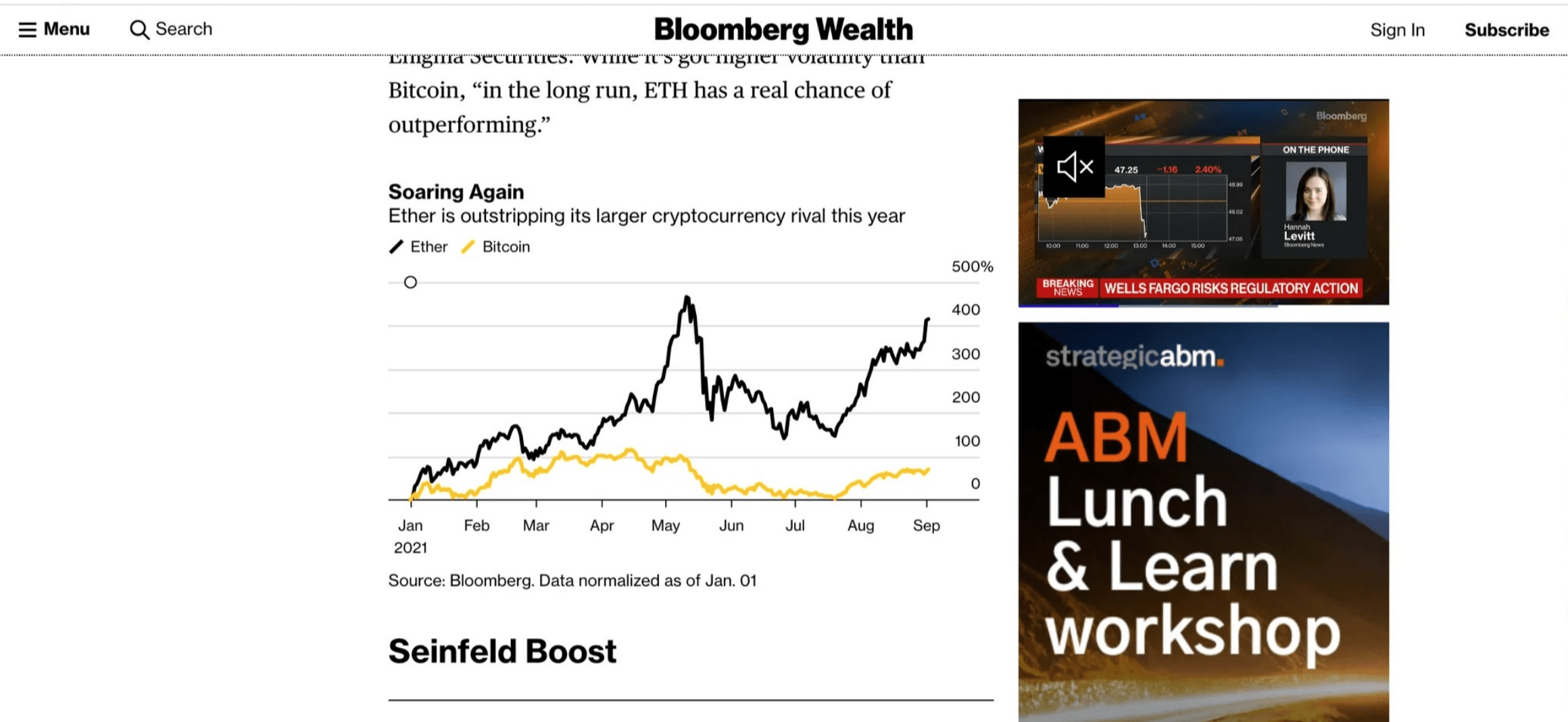
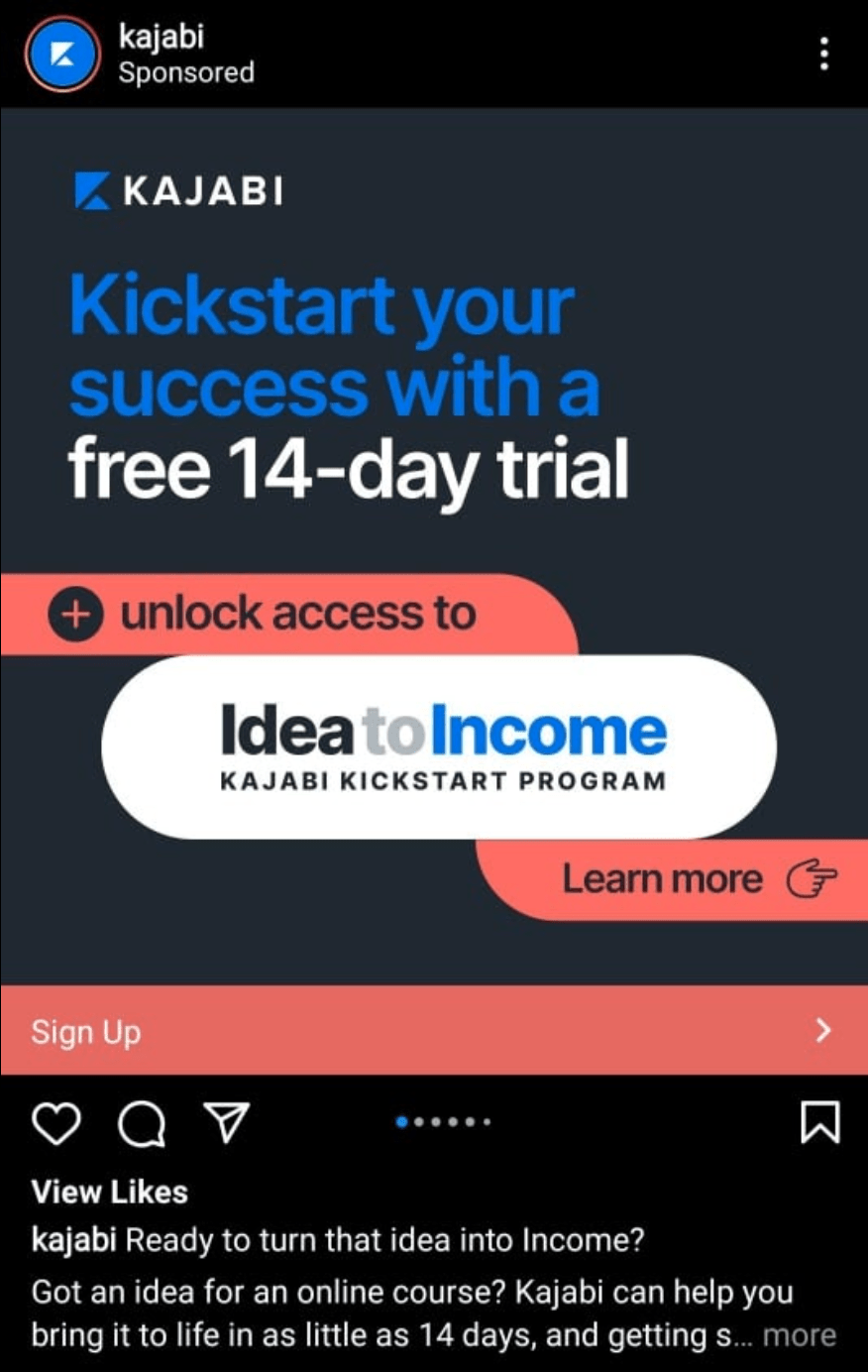
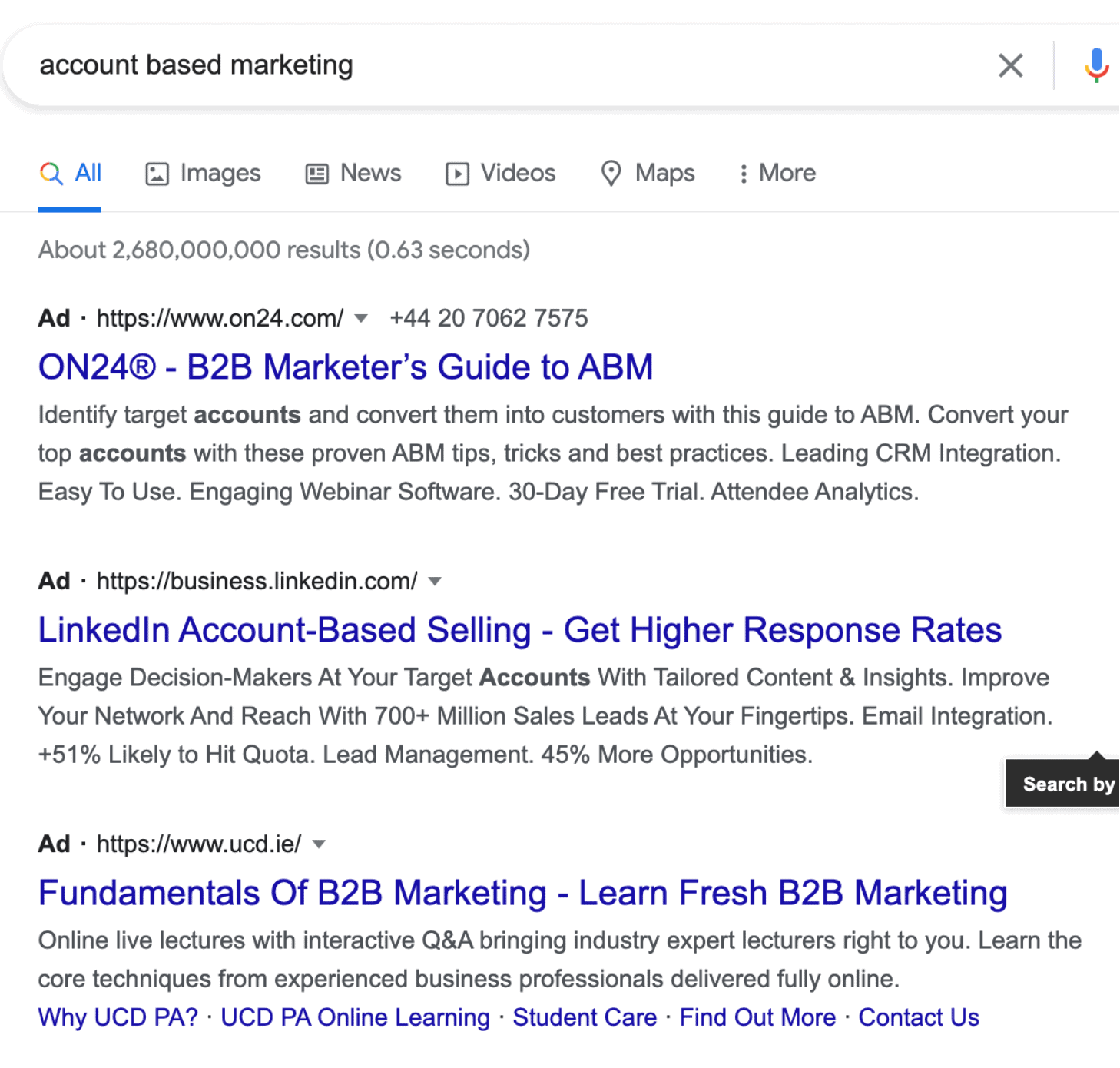
Email messages Social media display ads Website banners (even if the website you’re browsing has nothing to do with that brand specifically)
Retargeting ads allow you to finish the job and turn prospects into leads.
You have lots of flexibility when it comes to paid advertising. However, knowing what role you want it to play in your marketing strategy can be the difference between dollars gained and dollars wasted.
2. The Role of PPC in Marketing Strategies
PPC advertising is an efficient way to find ideal customers that would otherwise be difficult to find. After all, you can’t be in all places at once.
But when your PPC ad finds the right audience, you need to make sure that you’ve created it to address the right intent.
As the name implies, purchase intent is when a consumer shows signs of being ready to buy a product or service.
A general ad about your business is unlikely to get the conversions you’re hoping for. PPC provides an opportunity to create a sense of urgency by addressing the specific problem your ideal customer is seeking to solve.
To create an effective PPC campaign, you need to decide what your ultimate goal is.
Is it brand awareness? If you’ve just launched a business, a new product, or you’re trying to attract new customers, your goal should likely be brand awareness.
Brand awareness can be like a social currency for startups.
Sales will always be a top priority. However, before you can start to grow your revenue, you need to build credibility in your industry, build trust with your ideal customers, and slice out a part of the market.
Think about what messaging resonates with your audience most. Your goal here is to have your ad illustrate your style and expertise in a compact package.
If you need to prove product-market fit, generate more sales, or justify upgrades for a product, this is the goal you want to focus on.
You’ll need to customize your copy and targeting strategy to ensure you’re communicating the transformation your offer provides while also never losing sight of your customer.
In a brand awareness campaign, you may not have been using retargeting ads. But when you’re focused on maximizing each site visit to its fullest potential (i.e., a purchase)—you’ll wanna make sure that potential customers don’t slip through the cracks.
Base your targeting on your buyer personas. Confirm what you know and don’t know about their purchase habits. Then, use those insights to craft a customer journey map that enables you to send them the ads relevant to their journey at the right time.
3. Why Your PPC Ad Needs a Dedicated Landing Page
Look, you can create the most quintessential display ad, craft the most impeccable search ad, and kick your feet up expecting the traffic to roll in like a runaway train—but you’ll only see tumbleweeds if you don’t optimize the post-click.
Post-click marketing is the practice of engaging with potential customers after they click on your business’s PPC ad. Think of it as your typical marketing funnel. The first click achieves awareness and proves user interest. The next stage is where decisions get made.
Users can either leave your site entirely or travel further down the funnel, depending on how your post-click marketing impacts their consideration of your product. This is your opportunity to personalize the redirect path as much as possible.
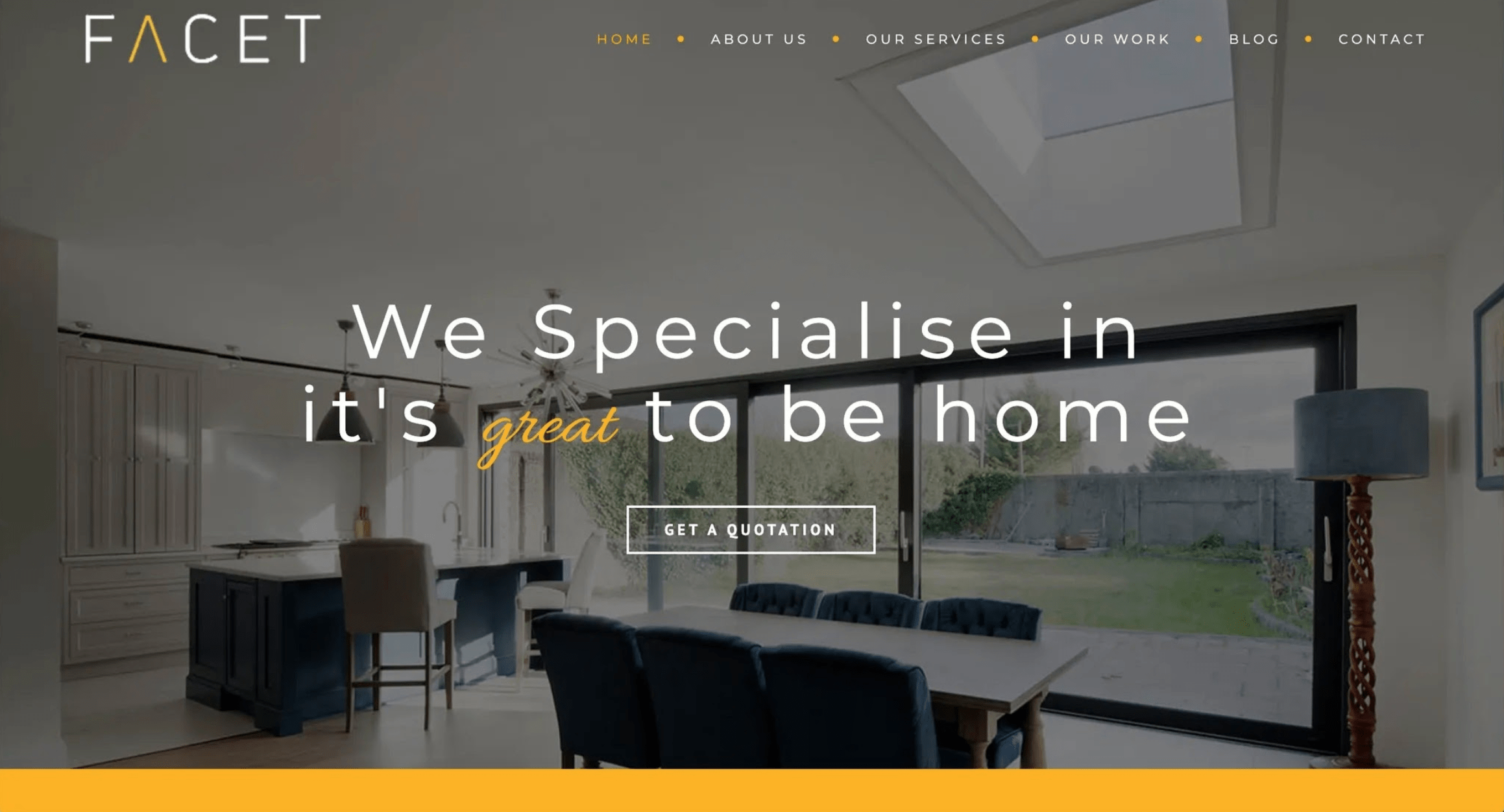
It’s a beautiful homepage, but as a user—you’re lost.
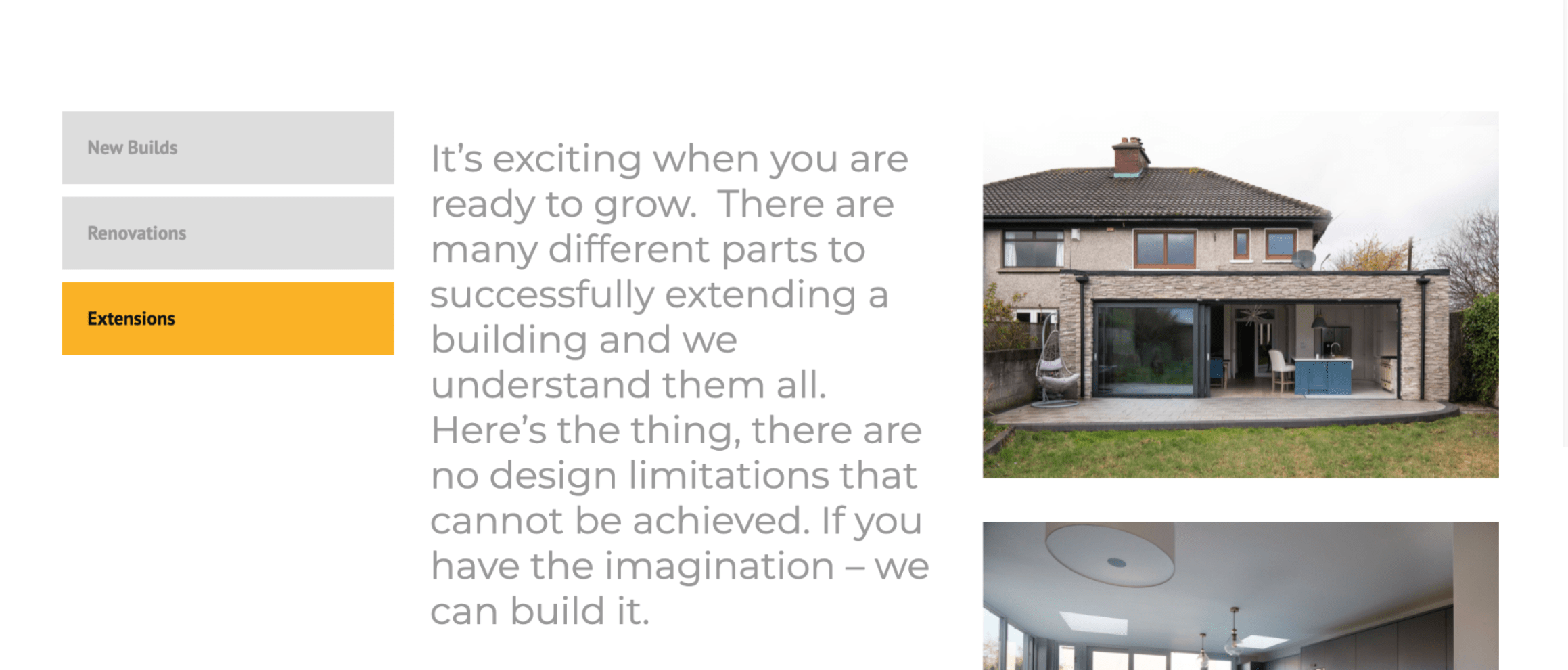
You clicked that ad for one thing only: home extensions. But that homepage requires you to navigate the site to find what you’re looking for. While it wouldn’t be that hard to find, it’s more clicks and content for your brain to consider while browsing.
When optimizing your post-click strategy, your goal is to limit distractions and bring the user to the exact destination implied by your ad. This is called message matching and, for PPC marketers, conversions are made and lost on the accuracy of this strategy.
That’s why Facet’s ad brings users to the page below instead of their home page.
Personalized, targeted, and relevant landing pages play a huge part in determining whether your PPC ads convert as intended.
With each campaign you create, you should also consider how to customize the landing page it leads to. Your PPC ad and landing page need to work together like Batman and Robin to achieve your goals.
But there are a host of variables you need to consider to make that happen.
4. A Step-By-Step Guide to Optimizing Your Post-Click Strategy
Copy
Instead of starting from a blank slate when creating copy for a new ad, why not remix the content from your landing page?
It’s a tall order to jam all the relevant information from your landing page into a headline and a 90-character description that’ll get users past the first click.
But when you prioritize message match and focus on being clear rather than clever, you’ll find that your headline almost writes itself!
If it doesn’t, here are a few headline formulas you can rely on to help you frame your offer:
The how-to headline: Highlight your expertise by linking it to a common goal your target audience is trying to achieve. You’ll need to make it specific and show some social proof to back up your claim for this one to work.
The agitator: The goal here is to highlight a pain point for your target audience and provide an alternative solution that they’re unlikely to have considered (i.e., your differentiator). You’ll want to use this strategy as a play on your key search term.
In the example below, Noom leverages the high-yielding keyword “diet” to capture the attention of its target audience and present a bold alternative. In this case, their differentiator is using behavioral science to help people take control of their health.
The listings lab: Show your target audience you know exactly who they are by both highlighting a pain point and naming their demographic. Example: “Stuck at Six Figures in Your Real Estate Business?” The headline speaks directly to the ideal customer. In this case: real estate professionals looking to grow their business.
Remember that, whichever headline you choose, you want to make sure that it mirrors what the user will find on the landing page that comes post-click.
Marketers need to master a suite of different skills to be effective, but they all boil down to understanding how to manage user expectations.
It doesn’t mean that your PPC ad needs to be a carbon copy of the copy on your landing page (though, when in doubt, that wouldn’t be theworstoption). You can diversify your copy while still keeping it clear, creative, and connected.
You can use a hierarchy system to leverage the use of your keywords. For example, if you’re advertising a “contactless payment system,” you can leverage keywords associated with that same theme, such as:
Accept online payments
Online payments
Payment processing
Remote payments
Pre-built payment options
Take card payments
Secure payment solutions
By adding terms like “best” or “buy,” your keywords are now directly tied to active buyers in comparing and contrasting solutions in the purchase stage of their search. Just a tip here: 65% of traffic to this type of keyword comes from paid clicks compared to 35% of organic results.
If you don’t feel 100% confident with your first draft of ad copy, don’t hesitate to experiment with different combinations—as long as your copy mirrors what’s on your post-click landing page.
Finding the right keywords to string together will require a bit of tweaking before you discover the right fit for your audience.
You’ll know you’ve found the right fit for your PPC ad when the copy includes three components vital to your campaign’s success:
A compelling tagline: We already touched on headlines, which hold the highest importance for your ad, but your headline and tagline shouldn’t always be the same. Your tagline is a short, memorable phrase that demonstrates the vision behind your offer.
With your headline, it’s better to be clear instead of cute. With your tagline, it’s better to be distinctive than it is to be dry.
Crafting a compelling tagline leverages memory recall, which can be to your advantage since you want to stay top of mind when it’s time for your ideal customer to make a purchase.
Here are a few common taglines that the world has adopted over time:
Nike: Just Do It Apple: Think Different. Subway: Eat Fresh.
A clear and strong CTA: Your main goal with your landing page is to get your users to take a specific action. Sometimes, marketers fall into the trap of “selling mode” and neglect the need for a refined call to action focused on the product or service’s value to the end user.
Think of the CTAs you commonly see across different websites and platforms:
“Get started.”
“Sign up now.”
“Subscribe now.”
Yes, technically, they’re telling the user to take a specific action. But that’s just it—they’re telling as opposed to guiding.
Those CTAs don’t communicate value from a user perspective. By changing your language, your CTAs can become more targeted and personalized, converting 42% more visitors into leads than non-targeted CTAs like the ones above.
Here’s how you give those CTAs a personal touch. Notice the word “your” in each line:
“Take charge of your finances.”
“Grow your following.”
“Launch your site.”
Urgency: Listen, there are billions of search entries per day, which means that you need to compete for your audience’s attention.
After you’ve crafted your headline and tagline, it’s time to bring it home with a sense of urgency that signals the value of your commodity.
Set a deadline, offer a bonus incentive, use phrases like “last chance,” “before it’s gone,” and “one time only.”
Tip: Writing conversion-focused copy can take more time than you think. You need to research your customers and their past purchase behaviors, test different copy combinations, and create high-quality content quickly to remain competitive.
That’s why we’ve acquired Snazzy AI, an AI content generator that takes the pain out of copywriting to help you create those optimized marketing campaigns way faster. AI-powered copywriting gives you better results with less work. See how you can start optimizing your landing page copy with Snazzy—for free.
Imagery
Your post-click landing page is the user’s first impression of your brand—so you have to be looking your best.
There are endless theories out there regarding what colors and images you should use on your landing page to bring you closer to converting visitors. Before relying on those “best practices” to provide the results you’re looking for, you should always, always, always let your copy inform your use of imagery.
One way to get started is to make sure the header on your post-click landing page matches the keywords and/or CTAs used in your PPC ad.
Let’s use the Deel payroll search ad as an example.
The landing page doesn’t imply Deel will do the payroll for you (as they state in their headline). However, the keywords “world,” “work,” and “international” all work in tandem with the image of the young employee dressed in casual clothing, wearing a backpack, and smiling.
Even without reading the descriptive text, you can tell that you’ve landed in alignment with where you expected the ad to take you.
(Excitement and interest sustained .)
As a B2B company, Deel is less likely to be targeting the persona shown in this image. However, research has shown that visitors respond best to landing pages with realistic, human imagery instead of stock images.
Instead of using the header of this post-click landing page to feature a picture of a hiring manager, Deel creatively uses the image of a satisfied employee (the woman looks ecstatic) able to work remotely from anywhere in the world.
So, here are some questions to consider when choosing imagery based on the keywords used in your PPC copy:
What does your headline say?
What is it communicating (ease, quality, simplicity, speed)?
Who’s your target persona for this ad?
How can they be reflected in your header image?
What emotions from your ad copy will you mirror in the imagery you choose?
Also, keep in mind that social proof and testimonials can be your best friend.
Word of mouth recommendations from industry friends carries a lot of weight in the B2B world. About 97% of B2B customers stated that testimonials and peer recommendations are the type of content they rely on most.
Business is changing these days, and people are much more skilled at judging the authenticity of a brand from their landing page imagery, clientele, and presence online.
You can also optimize your landing page to feature images of the product your customers enjoyed the most or had questions about.
Segmentation
Creating personalized experiences for different segments of your audience is no easy feat.
You’ll need to know more about your audience segments than just their age, where they live, and how much money they make.
Your PPC ad will perform better when you use segmentation to target different keyword variations, locations, personas, and events.
Making audience research a continuous process will help inform the details you’ll need for your PPC ads.
If you’re:
Conducting customer interviews or distributing micro surveys.
Monitoring social media platforms.
Comparing competitive data.
Monitoring site performance.
Then you have all the data you need to personalize your PPC ads.
On top of targeting demographic data like age, location, and gender, it also helps to consider the psychographic data of each of your audience segments. Understanding the habits of your ideal customers allows you to take advantage of time targeting.
Let’s not beat around the bush: PPC campaigns can get expensive quickly.
By monitoring the conversion and performance data day by day and comparing it to previous weeks, you’ll be able to spot times of peak engagement that occur on specific days within a defined time frame. It’s a technique called dayparting.
You can use the technique to optimize your PPC campaigns and control your ad spend by serving ads at those specific peak times.
Psychographic data can help you with your ad scheduling and assist you in creating variant post-click landing pages that convert visitors.
You want to be that overeager friend in the group that asks all the questions:
→ What are their working hours?
→ When do they like to shop online?
→ What devices do they use to shop online?
→ What payment options do they prefer for online purchases?
→ What are their hobbies?
This way, you can segment your PPC targeting by topics, interests, and life events.
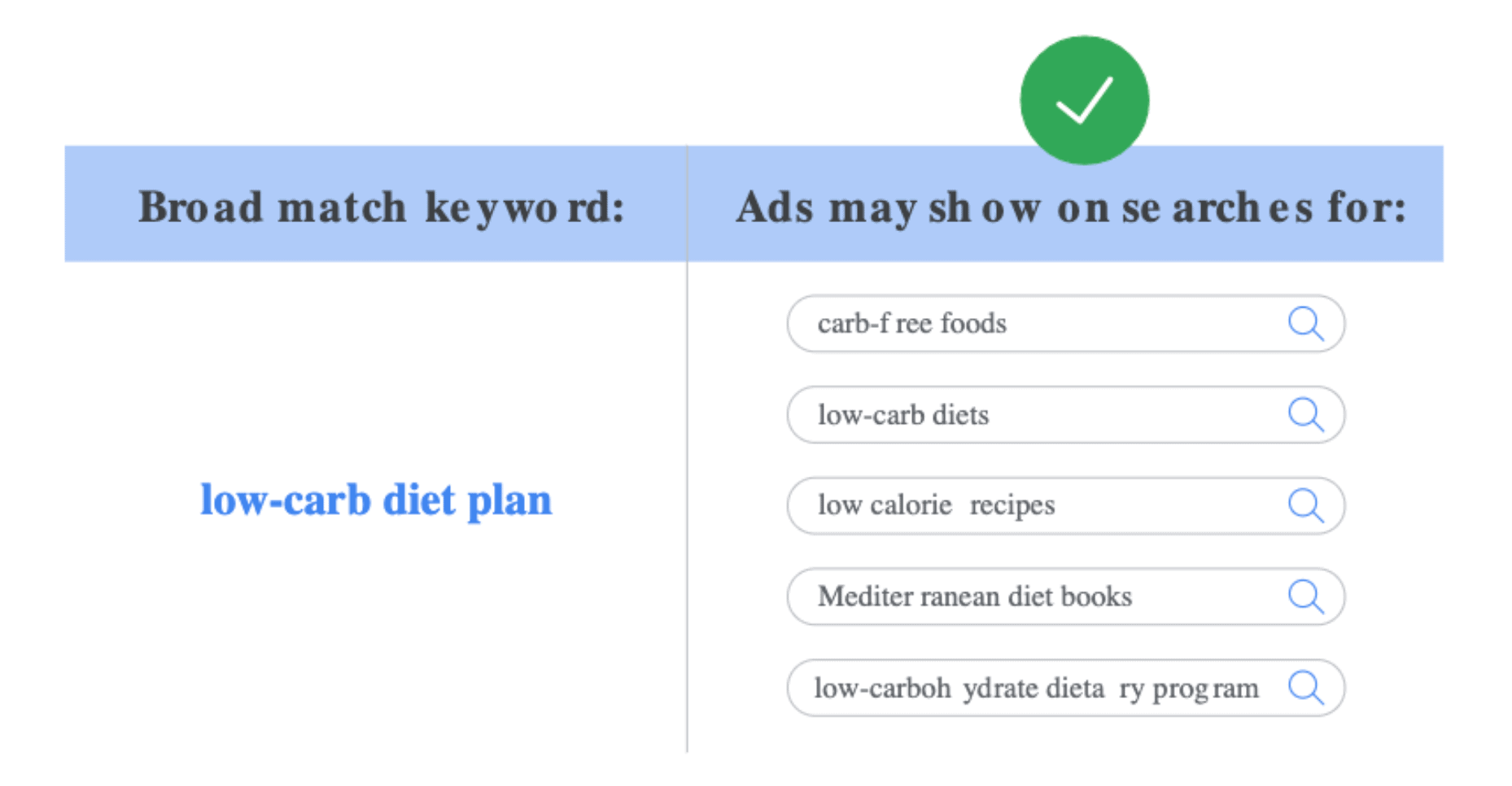
With Google’s broad match keyword targeting, the keywords in your PPC campaign can show up beside related topics that don’t contain your keyword.
For example, if your keyword were “low-carb diet plan,” it would show up as a result in the associated searches below:
Broad match keyword targeting can help you find audiences you may not have considered and give you insight into how you can optimize your search terms if you’d like to make them more refined.
But that ad spend will pile up quickly if you have a broad target with no way of narrowing down your audience.
The key to saving your ad spend is to use negative keywords in conjunction with your primary keyword terms and phrases. You can continue with your long-tail keyword “low-carb diet plan” while excluding the common search term “diet” so you won’t serve your ad to general audiences.
Once you find the proper targeting parameters for your various audience segments, you need to make sure that to maintain your personalized message on your post-click landing page.
You can create various post-click landing pages by simply adding a few thoughtful edits to your original creation.
Let’s continue with the low-carb diet plan idea:
If one audience segment is women, 25-30, living in Los Angeles, searching for low-carb diet plans, tired of going to the gym, and making $70K annually, modify the imagery and CTAs on your post-click landing page to appeal to that persona.
If another audience segment is men, 35-40, living in Manhattan, searching for low-carb diet plans, tired of eating fast food, with no time for the gym, and making $50K annually, modify the imagery and CTAs on your post-click landing page to appeal to that persona.
Creating variants may take more time, but your audience will be far more likely to respond to an offer that shows an intimate understanding of their situation.
If you need help expediting this process, check out Unbounce’s Smart Traffic tool.
Page structure, design & hierarchy
Once a user lands on your post-click landing page, the heat is on.
This is the consideration stage at which that visitor either becomes a customer or chooses to leave your site.
Tip: Keep in mind that site bounces aren’t always a bad thing. Of course, we always want visitors to convert, but that’s not realistic for most first-time visitors. Learn how to leverage remarketing here, so you never lose touch with a potential customer.
You have two main goals with your post-click landing page:
1. Ensure that PPC ad messaging is maintained
2. Reduce friction along the path to purchase
Advertisements above the fold have about 73% more viewability than CTAs below the fold. If your site visitor needs more convincing, then they’ll scroll down for supporting info. But make sure your main message is prominent on your page.
It also helps to have data on the device your target audience uses most frequently to browse online. For example, heat mapping shows how users navigate your page, including where they click and how far they scroll.
You can leverage this data to make changes to where you place information and structure your page with a user interface (UI) design delivering a great customer experience for both mobile and desktop devices.
In July 2021, a study found that 49.71 percent of total web visits come via mobile, compared to 50.29 percent from desktops. Even if the ratio favors desktop over mobile, optimizing the mobile user experience (UX) is still good practice.
There’s one way you can ensure your design transfers well between devices: visual hierarchy.
If you follow the law of visual hierarchy, you increase your chances of getting your visitor to convert. Users will spend an average of 6 seconds above the fold on your post-click landing page. You’ll want to make sure you’re as clear as possible, that you sustain the excitement from the PPC ad, and that there are no interruptions.
Even if your newsletter has thousands of subscribers and you feel that any interested page visitor could benefit from it, now is not the time.
Remember: Reduce friction along the path to purchase.
This brings us to the length of the forms you might be hosting on your post-click landing page.
First, you’ll need to confirm what type of information is critical for this step of the signup process and whether you need new leads or higher-quality leads.
If you need new leads, short and straightforward forms make the best first impression. You just need to make sure you have enough information to contact these new leads.
Ask for their:
First name
Last name
Email
If you deem it necessary, you can also ask for their job function and the company they work for. But for locking in new leads, this form shouldn’t exceed five questions.
In the B2B world, you’ll often need to sift through hundreds of forms to segment higher-quality leads. You’ll want to make sure the people filling your forms can pay for your offer and are confident in your solution.
For longer forms, it’s common to ask questions like:
First name
Last name
Email
Job function
Company
Industry
CRM system(or alternative tech inquiries)
Again, knowing your audience segments will help you create the right forms for the right clientele.
Tip: B2B doesn’t have to be boring. The colors, images, and graphics on your forms have a big influence on that last click. We’re not saying, “Grab a CSS expert and go wild!”
Use the styling of your landing page forms to stay aligned with the personality of your audience segments. Oh, and don’t be afraid of white space. Having a bit of white space around your forms increases its readability.
Using a tool like Hotjar across different pages you’ve published can help you understand how your audience navigates content. This practice of heat mapping shows you how visitors interact with individual website pages, where they get stuck, and what elements they spend the most time on to optimize your landing pages based on real-time interaction data.
That’s one step closer to working smarter instead of harder if you ask us.
Streamlining your strategy
Once you make sure your landing page and PPC ad copy are in complete alignment, it’s time to set some goals and get into campaign mode.
Throughout this guide, we’ve been talking as if you’re selling a product or service. In truth, we don’t know what your goal is.
That’s because whether it’s brand awareness, lead generation, or sales, the same principle still applies: Optimize the post-click experiencethrough message matching.
Copy, segmentation, and page design are the tools you’ll need to make that happen. And once it does, there are a few metrics that will matter more than others. These include:
Landing page views: Page views are the first indication your PPC ad struck a chord with someone (hooray!). The number of page views your PPC ad generates shows you two things: Whether your ad copy reaches your audience (or not) and attracts the right audience (or not).
Sessions by Source: When you’re able to see where traffic to your post-click landing page is coming from, it saves you from guessing how to optimize your campaigns. Whether people are reaching your post-click landing page from a blog post, a referral website, a display ad, or a search ad, these insights reveal where your target audience spends their time online and your best way of reaching them. Once that’s discovered, you can refine your targeting to base your ad spend on demographics, timing, and trigger events that have already shown positive results.
Bounce rate: As we mentioned above, as much as we dislike it, bounce happens. Bounce rates represent the percentage of visitors that come to your page and leave without viewing other pages or converting. Your bounce rate doesn’t mean you failed. It’s an opportunity to figure out what isn’t resonating with visitors.
Goal completions: Here’s a metric that shows you when you’re winning! Whether it’s a purchase, a subscription, or a resource download, conversions are what make your efforts worthwhile. Just make sure that you’re tracking the goal completions that justify your investment in the PPC campaign compared to company revenue.
Cost per acquisition (CPA): This is the metric that shows how much money you’re spending. CPA is the average amount you pay for a customer to take action like:
Clicking
Filling out a form
Downloading a resource
Purchasing a product
Signing up for a newsletter
Here’s a simple formula to calculate CPA: ad spend ÷ number of actions taken.
You don’t want to wait for this number to get high and out of control before optimizing your campaign, so improving your CPA and making the most of your marketing budget is essential.
Put It All Together and What Do You Get?
A dedicated landing page for your PPC ads (rather than just a generic homepage) enables you to streamline content and reduce friction along the path to purchase.
Cha-ching.
With this guide, you can rest assured that, regardless of the format you choose for your PPC campaign, your post-click landing pages will be ready to go.
Remember why your PPC ads need a dedicated landing page:
1. To align to the user.
2. To increase personalization for your audience segments.
3. To increase conversions, of course!
To achieve those goals, you’ll need to focus on a combination of copy, imagery, page design/structure, and audience targeting. It may sound like a lot, but it’s all about connecting the dots. Make sure you keep your messaging consistent, and you’ll be well on your way to optimizing a post-click landing page that delivers better results in your PPC campaign.
If you need help testing out variants of your landing page, try Smart Traffic and let machine learning speed up your results to get the best conversion rates possible.
 Via Digital http://www.rssmix.com/


 ) to wealth, but in Japan, that e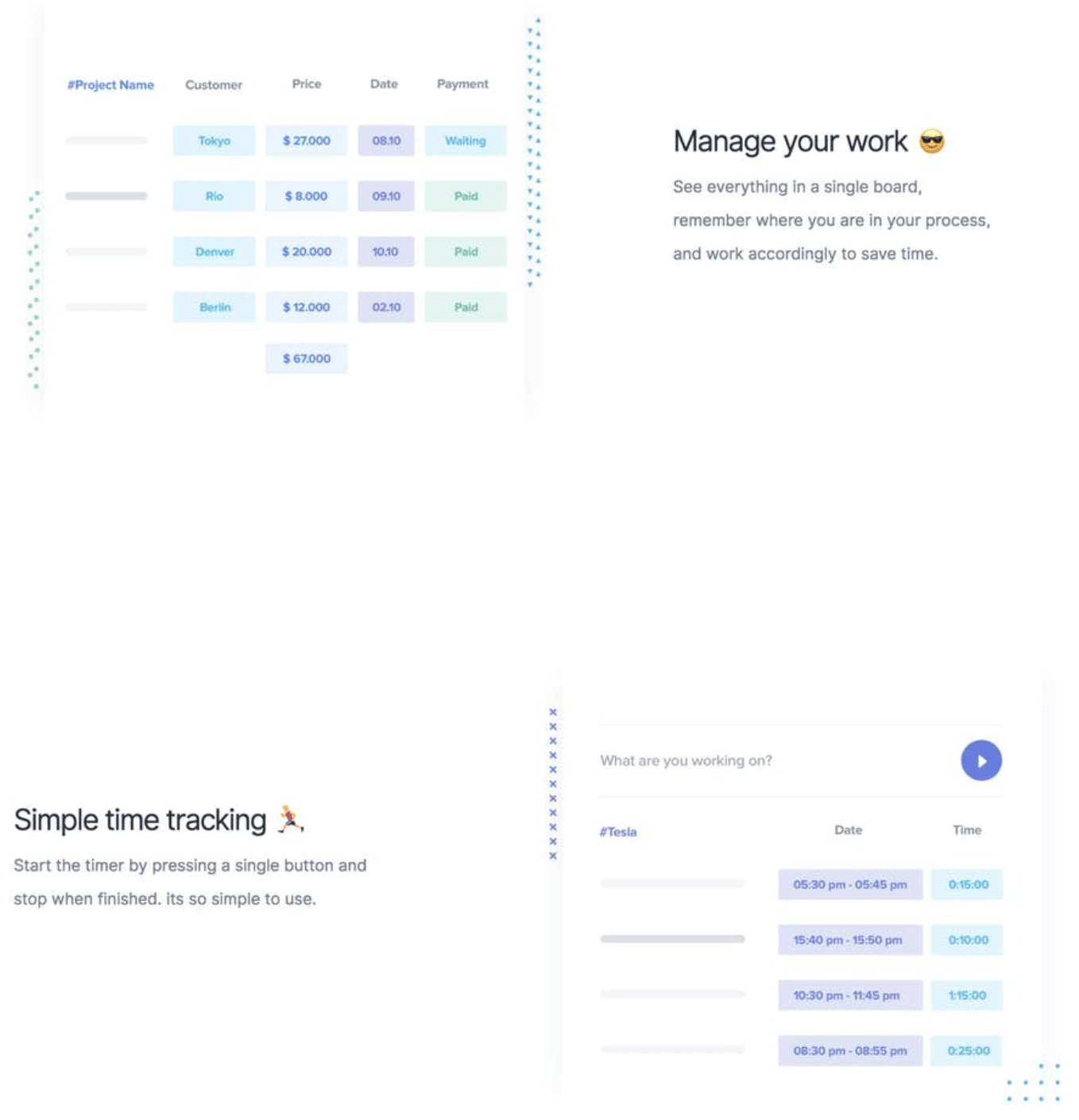
 Platform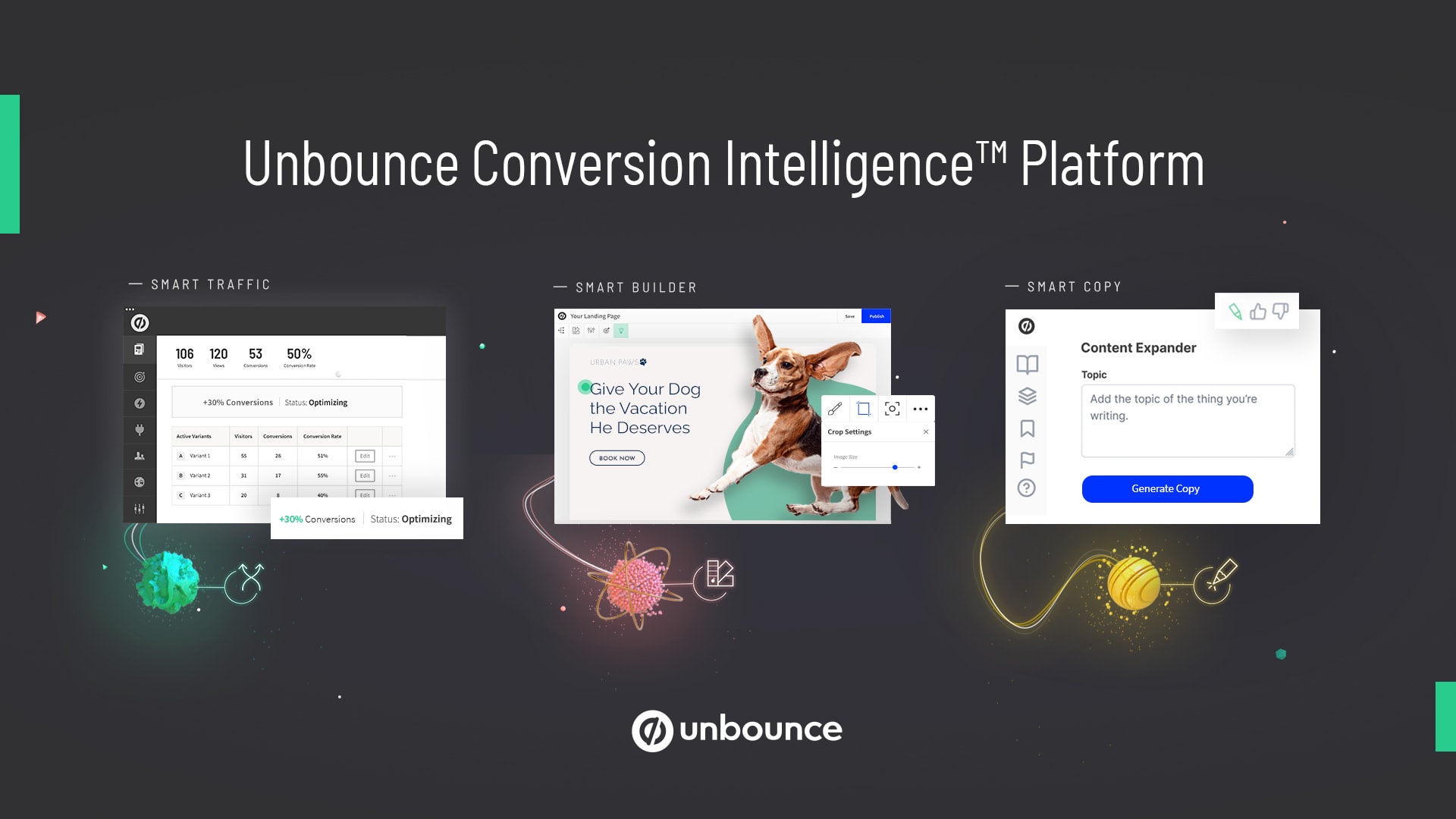



 :)
:)

 Email messages
 Social media display ads
 Website banners (even if the website you’re browsing has nothing to do with that brand specifically)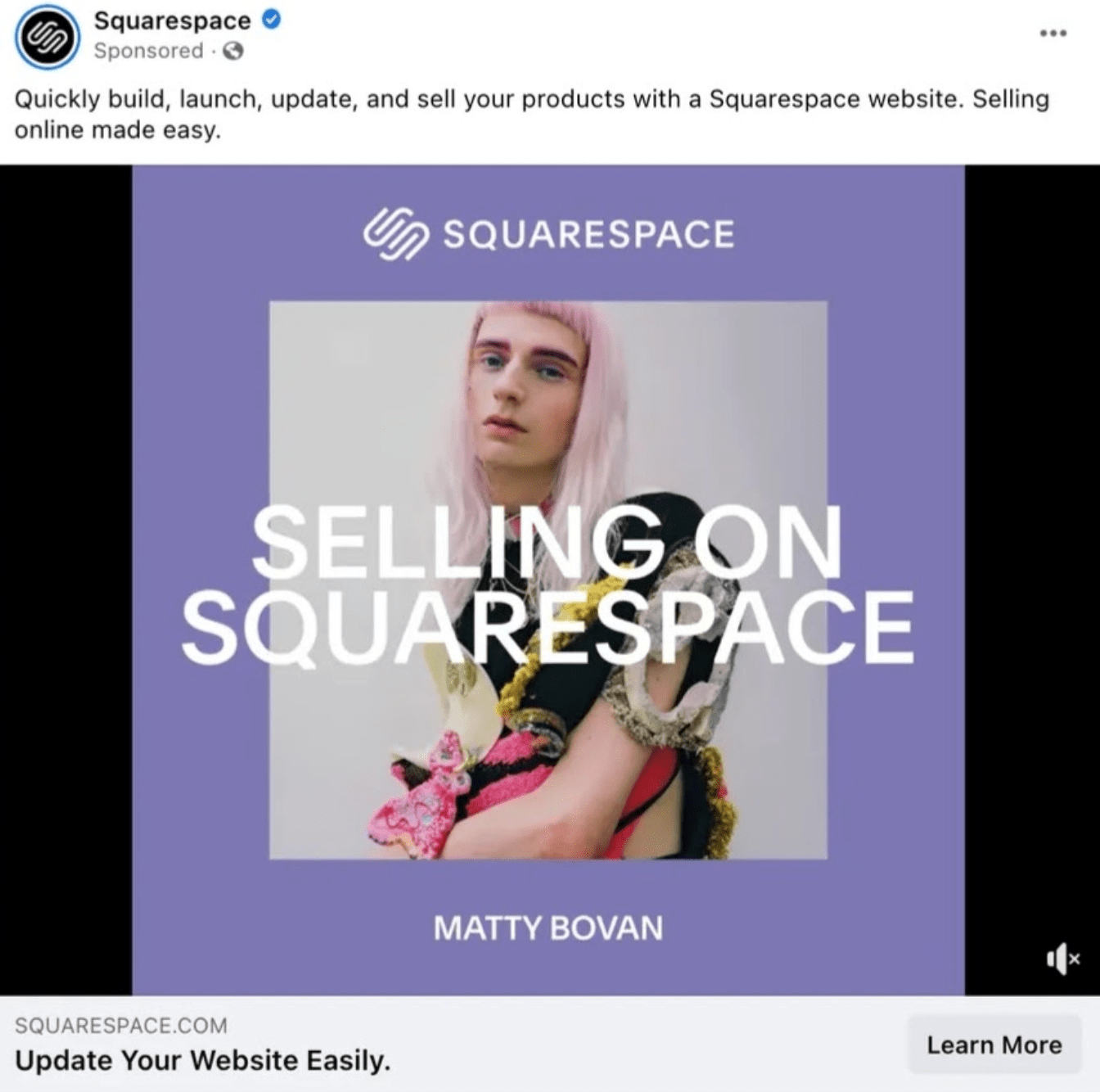





 .)
.)


 Clicking
 Filling out a form
 Purchasing a product
 Signing up for a newsletter